Antarctica, a unique opportunity to do science at the highest level in one of the remaining almost virgin places on the planet
Miguel González Pleiter is a researcher in the group led by Professor Roberto Rosal of the UAH Chemical and Environmental Engineering Department. He came back past march after a research on microplastics on King George Island, in Antarctica.
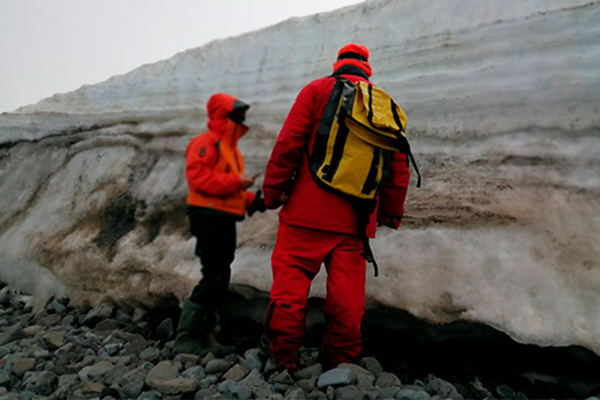
He affirms without hesitation, that he went there following his research vocation: 'It's been a unique opportunity to do science at the most highest level in one of the remaining almost virgin places on the planet. You could observe nature in its purest form in order to understand how it works and see how anthropogenic influence can alter it'.
The project of the UAH´s Research Group of Chemical and Environmental Engineering, is led by Miguel Gonzalez Pleiter. This project was funded by the Carolina Foundation and it´s part of a national collaboration with the Universidad Autónoma de Madrid and the support of the Spanish Polar Committee and an international collaboration within the ANTARplast project. This project is made up of doctors Franco Teixeira, Gissell Lacerot and Juan Pablo Lozoya (CURE-UdelaR, Uruguay), financed by the Uruguayan Antarctic Institute.
The objective is to investigate the impact of microplastics on these ecosystems. The UAH researcher explains, 'We have studied whether once the microplastics reach the Antarctic continental fresh waters, they are colonized by bacteria, and if these colonizing bacteria have a relative abundance of genes for antibiotic resistance greater than that present in the bacteria in the environment (those in water and sediment of the lakes)'.
This could affect citizens because, as the UAH researcher explains, 'We could be talking about that microplastics could be a form of dispersal of antibiotic resistance genes. These genes are similar to those present in multi-resistant bacteria that are a problem in today's hospital setting'.
Different studies have shown the real presence of microplastics in Antarctica. Miguel González Pleiter has been accompanied by five Uruguayan researchers' They have been studying whether two zooplankton organisms present in Antarctic lakes, when they ingest these microplastics, the antibiotic resistance genes present in the microplastic colonizing bacteria are transferred to the microbiome of these organisms'.
The key question is whether microplastics can upset food chains and balance in aquatic ecosystems: 'we don't know. Hopefully not, but they could certainly have some impact on them' he replies.
Thanks to researchers like him, science advances more and more. Undoubtedly, curiosity has led him to live this research in Antarctica first hand for more than a month. He assures, 'the desire to know what´s up there behind what we already know is the engine of this vocational profession'.
Publicado en: Inglés